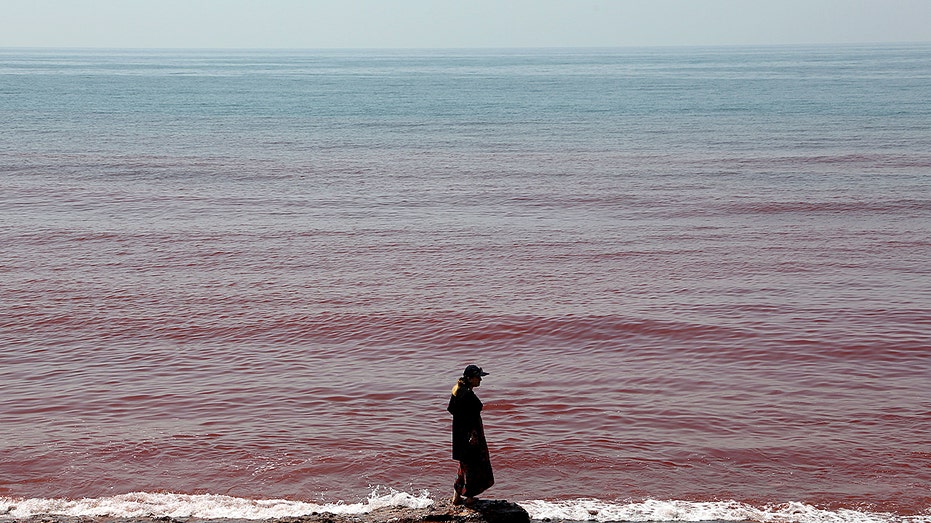
The landscape of Hormuz Island, a small jewel in the Persian Gulf, underwent a startling transformation. Recent torrential rains didn’t just dampen the earth; they turned it a shocking, visceral red, a sight captured in a viral video that quickly spread across the globe.
Footage revealed a dramatic scene: crimson water cascading down the hillsides and bleeding into the turquoise waters of the Persian Gulf. The island’s aptly named Red Beach became even more intensely colored, appearing as if the very land was hemorrhaging.
The phenomenon wasn’t supernatural, but a stunning display of the island’s unique geology. The heavy rainfall acted as a catalyst, mixing with the island’s extraordinarily iron-rich soil and seawater to create the vivid, blood-red hue.
Hormuz Island isn’t simply red on the surface; it’s built from it. The island’s soil is overwhelmingly composed of hematite and iron hydroxides, giving it a deep, rusty coloration that’s been studied by researchers for years.
Known locally as “Rainbow Island” for its diverse and colorful rock formations, Hormuz is a geological oddity. It’s essentially a salt dome – a rising mound of rock salt, gypsum, and other minerals forced upward through layers of surrounding rock.
This unique structure makes the island’s rock unusually pliable, almost liquid under pressure. The red soil, locally called “golak,” blankets much of the surface, waiting for the right conditions to unleash its color.
When the rains arrive with force, they don’t simply wash over the landscape. They actively dissolve and carry the fine red particles of iron oxide downhill, transforming creeks, rivers, and ultimately, the coastal waters into a crimson flow.
The science behind the color is elegantly simple: iron oxide absorbs shorter wavelengths of light, reflecting back the longer, red wavelengths. This creates the striking visual effect, turning the runoff into a breathtaking spectacle.
While the sight evoked comparisons to the “blood rain” described in ancient texts and folklore, scientists assure us this is a natural occurrence. Similar events happen when rain or runoff carries dust, mineral-rich soil, or even algae.
Hormuz Island, home to a small community, remains a captivating example of the power and beauty hidden within the Earth’s geological processes. It’s a place where the landscape itself tells a story, written in shades of red.